
5 min read
PK boosters and bloom additives: what they do and when to use them
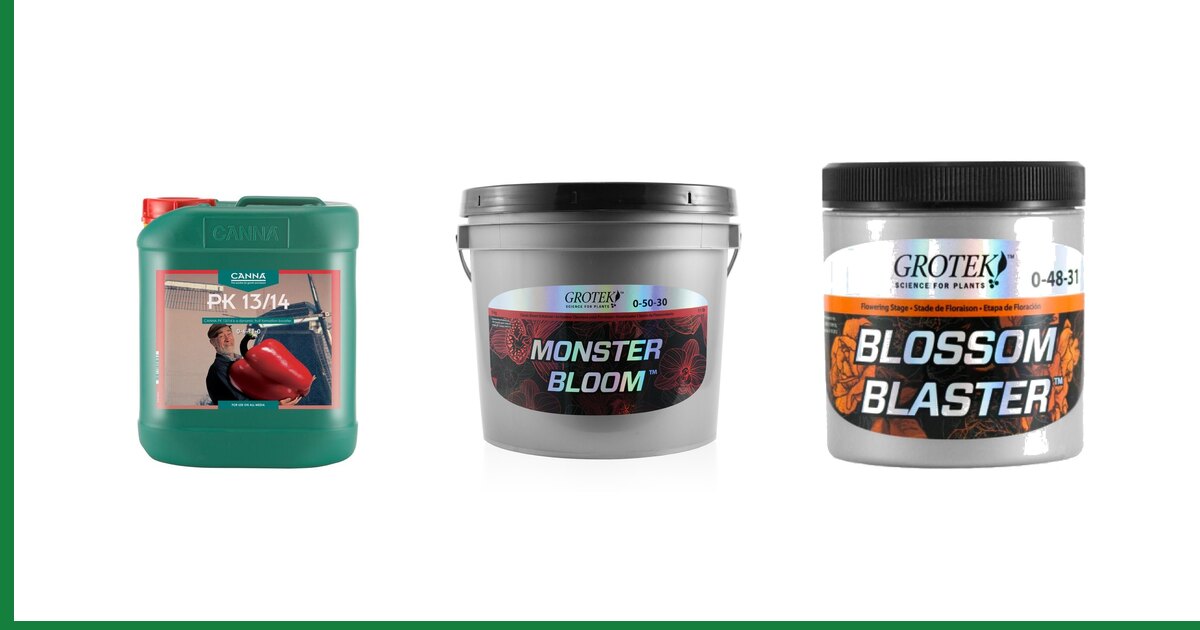
The short version. A PK booster supplies concentrated phosphorus and potassium for the part of flowering where demand is highest. It is a supplement to a complete base nutrient, not a replacement for one, and it belongs in a defined window rather than all the way through. Used on top of a base that is already well balanced, more is reliably worse.
The bloom shelf is where growers spend the most and understand the least, partly because the labels are shouting. Once you can read the analysis on the front, most of the mystery goes away.
Reading the three numbers
Every fertiliser carries an N-P-K analysis: nitrogen, phosphorus expressed as P2O5, and potassium expressed as K2O, each as a percentage by weight. That is all the numbers are.
| Product | Analysis | What that tells you |
|---|---|---|
| Nutrifield Veg Ignitor | 2-2-3-1 | Balanced, with nitrogen present - a growing-phase feed |
| Nutrifield Bud Burst | 0.15-0.1-0.9 | Very low overall, potassium-led - gentle, early flowering |
| Grotek Blossom Blaster | 0-48-31 | No nitrogen, heavily concentrated - a short pulse |
| Grotek Monster Bloom | 0-50-30 | No nitrogen, very high P and K - a bloom enhancer |
| Canna PK 13/14 | 13% P, 14% K | A dedicated PK booster, used in a window |
Two things follow from that table. A product with a zero for nitrogen cannot carry a plant on its own - it is an additive by design. And the very low totals on something like Bud Burst are not a weakness; they are what makes it usable early without overwhelming a plant that is still stretching.
What phosphorus and potassium actually do
- Phosphorus is central to energy transfer inside the plant and to flower and fruit set. Demand climbs as flowering starts.
- Potassium regulates water movement, stomatal behaviour and sugar transport. It is what moves the products of photosynthesis into the part you are growing for.
Both are supplied by any decent base nutrient. A booster exists for the weeks when demand outruns what the base was formulated to deliver - not to replace it.
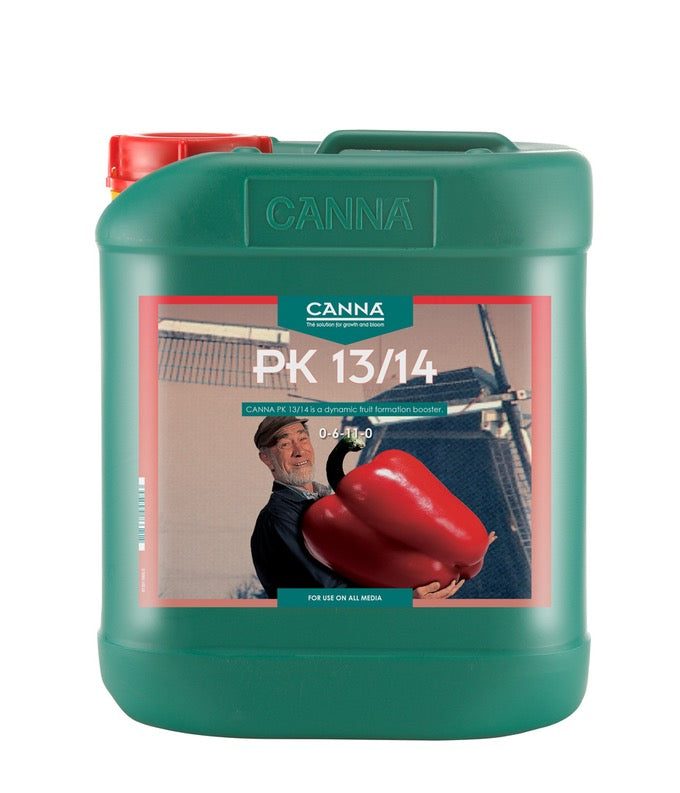
Canna PK 13/14 in 5 litre, and 10 litre for bigger rooms.
Why more is worse
This is the part the packaging never mentions. Nutrient uptake is competitive - elements share transport pathways, and an excess of one suppresses others.
- Excess phosphorus interferes with the uptake of zinc and iron, which shows up as pale new growth that looks like a deficiency of something else entirely.
- Excess potassium competes with calcium and magnesium, which is a particular problem in coco where those are already being fought over.
- Everything at once raises the total salt concentration, which makes it harder for the plant to draw water at all.
The pattern we see most. A grower adds a second bloom product because the first did not seem to do much, sees new growth pale off a week later, reads it as hunger, and adds a third. The fix is almost always to take things out, not put more in.
Timing: a window, not a whole phase
Most concentrated PK products are designed for a defined stretch of flowering rather than the whole of it. The manufacturer's chart is the authority for their product, but the shape is generally:
| Phase | Suitable | Not suitable |
|---|---|---|
| Vegetative | Balanced base feed | Any 0-P-K bloom product |
| Transition | Low-strength flowering additive such as Bud Burst | Heavy pulse products |
| Mid flower | One PK booster, in its window | Two or three stacked together |
| Late fill | Enzyme or tonic style additives | Fresh high-P pulses |
| Finish | Reducing feed, plain water | Anything concentrated |
Boosters that are not PK at all
Several popular flowering products work on a completely different principle, which is why they can sit alongside a PK booster rather than competing with it:
- House & Garden Bud XL is described as an enzyme based flower enhancer.
- Ozi Magic OMG Monsta Bud is a molasses based plant tonic.
- Canna Boost is a flowering accelerator run alongside the base feed, also in 10 litre.
- Nutrifield Crystalic and Full Bud sit in the later flowering additive group.
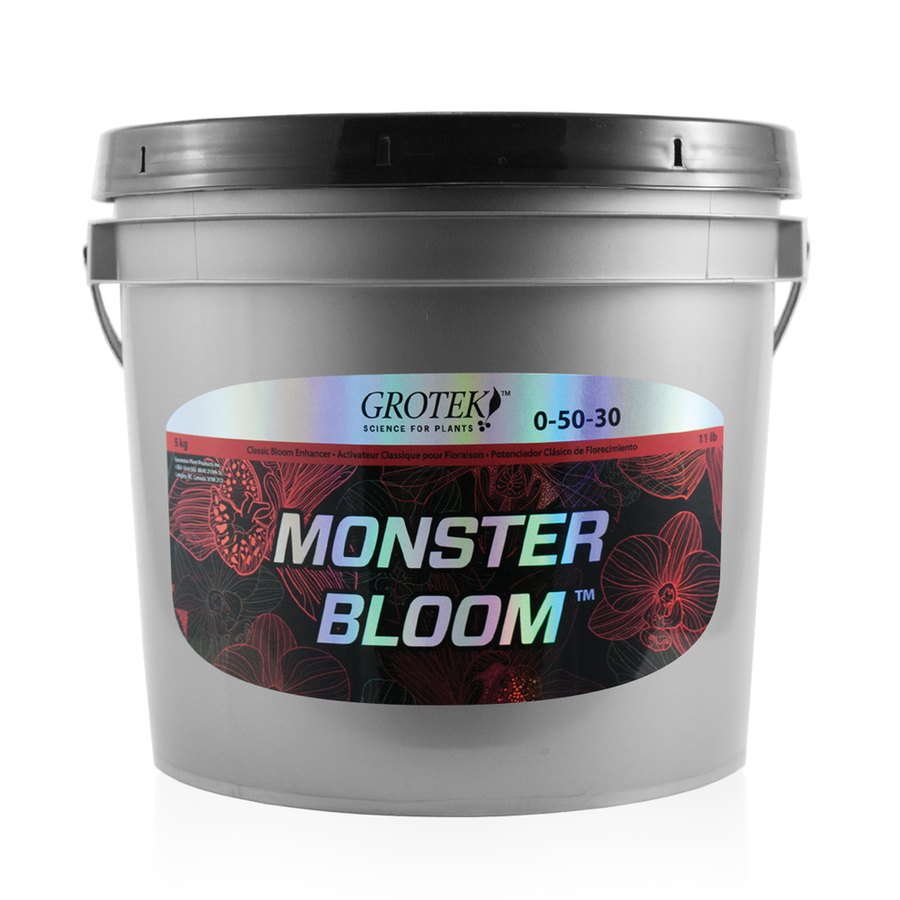
Monster Bloom, 0-50-30 - a powder concentrate, so measure rather than estimate.
Practical rules
- Get the base nutrient and the pH right before you buy an additive. See pH and nutrient uptake.
- Add one new product at a time, so you can tell what did what.
- Follow the manufacturer's window. Their chart was written around their own base.
- Watch the newest growth, not the oldest. That is where an imbalance appears first.
- Keep calcium and magnesium going through flowering - see growing in coco coir.
Everything above is under nutrients and additives, across the Dome and Canna ranges. If you want a hand matching a booster to what you already run, bring the bottles you are using in to Te Atatu and we will work it out with you.
Frequently asked questions
What does a PK booster actually do?
It supplies concentrated phosphorus and potassium during the part of flowering when demand is at its highest. Phosphorus supports energy transfer and flower set; potassium moves sugars and regulates water. It supplements a complete base feed rather than replacing it.
Can I use a bloom booster on its own?
No. Products showing a zero for nitrogen contain no nitrogen at all and are formulated as additives. Used alone they will starve the plant of everything the base nutrient was supplying.
Is it worth running two or three PK products together?
Generally not. Uptake is competitive, so excess phosphorus suppresses zinc and iron and excess potassium competes with calcium and magnesium. Stacking boosters usually produces deficiency symptoms and a bigger bill.
What do the numbers on a fertiliser label mean?
Percentage by weight of nitrogen, phosphorus as P2O5 and potassium as K2O. So 0-50-30 means no nitrogen, 50 per cent phosphate and 30 per cent potash - a concentrated flowering product, not a standalone feed.
When in flowering should I start a PK booster?
Follow the manufacturer's chart for the specific product, since each is formulated around its own base. As a general shape, gentle flowering additives suit the transition, concentrated PK belongs in a defined mid-flower window, and nothing concentrated belongs right at the finish.
My new growth went pale after adding a booster. What happened?
Often a phosphorus excess interfering with zinc and iron uptake, or a general salt build-up. Stop the additive, flush with plain pH-adjusted water, and resume the base feed alone before adding anything back.