
5 min read
pH and nutrient uptake: the range to aim for in coco, hydro and soil
The short version. In coco and hydroponics, most growers hold the feed between pH 5.5 and 6.3 and let it drift gently across that band. In soil, aim a little higher at 6.0 to 6.8. Mix your nutrients first and adjust pH last, because adding fertiliser moves the reading.
You can run a good nutrient and still starve a plant. Every element in the bottle has a pH range where roots can actually take it up, and outside that range the element is still in the water but effectively locked away. That is why a deficiency that will not respond to more feeding is so often a pH problem wearing a disguise.
The band you are aiming for
| Growing method | Working range | Notes |
|---|---|---|
| Coco coir | 5.5 - 6.3 | Behaves like hydroponics; check run-off as well as input |
| Recirculating hydroponics | 5.5 - 6.2 | Drifts up as plants feed; check daily |
| Peat or soil mixes | 6.0 - 6.8 | The medium buffers, so it moves more slowly |
Notice these are ranges, not targets. Chasing a single number is more work and gives you less.
Why a gentle drift beats a fixed number
Different elements peak in availability at slightly different points in the band. Iron and manganese are easier to take up at the lower end; calcium and magnesium do better a little higher. If you pin the reservoir to exactly 5.8 and hold it there, you sit in one narrow slice of that picture all the time. Letting the feed start around 5.5 and drift to 6.2 before you reset it gives the plant a turn at everything.
This is why chasing decimals with an eyedropper is wasted effort. Set the range, let it move, reset when it leaves.
The order of operations, which is where most people slip
- Fill with water and let it sit if it has come straight off the mains.
- Add any root or silica product first if the label says so - some must go in before the base feed.
- Add base nutrients. If you are running a two-part such as Canna A + B, add A, stir, then add B. Never pour them into each other undiluted.
- Add supplements and additives.
- Now read the pH and adjust.
Every one of those additions moves the reading, so a pH set before the bottles go in tells you nothing about what the roots will meet.
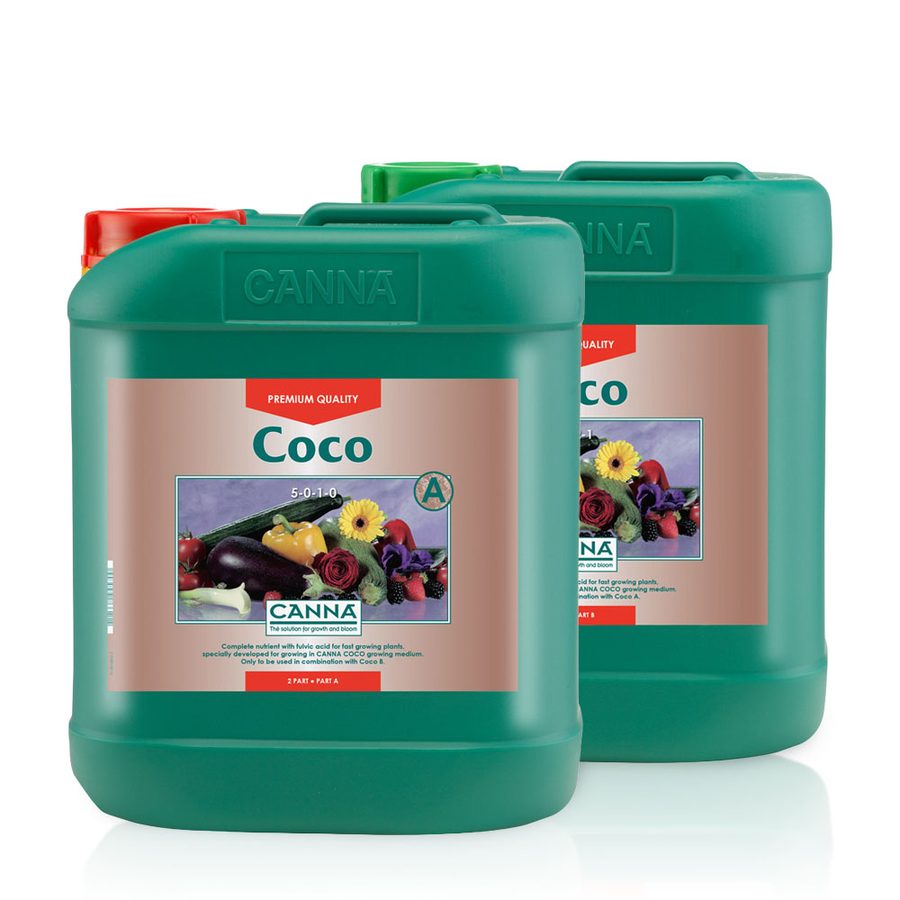
Two-part bases like Canna A + B go in separately and in order - see the full Canna range.
Your medium has a vote
Coco is not inert in the way people assume. Untreated coir holds potassium and sodium on its exchange sites and will swap them for calcium and magnesium from your feed, which drags the root zone away from where you set it and shows up as a calcium or magnesium deficiency in week three. Buffered coco has had that exchange dealt with before it reaches you.
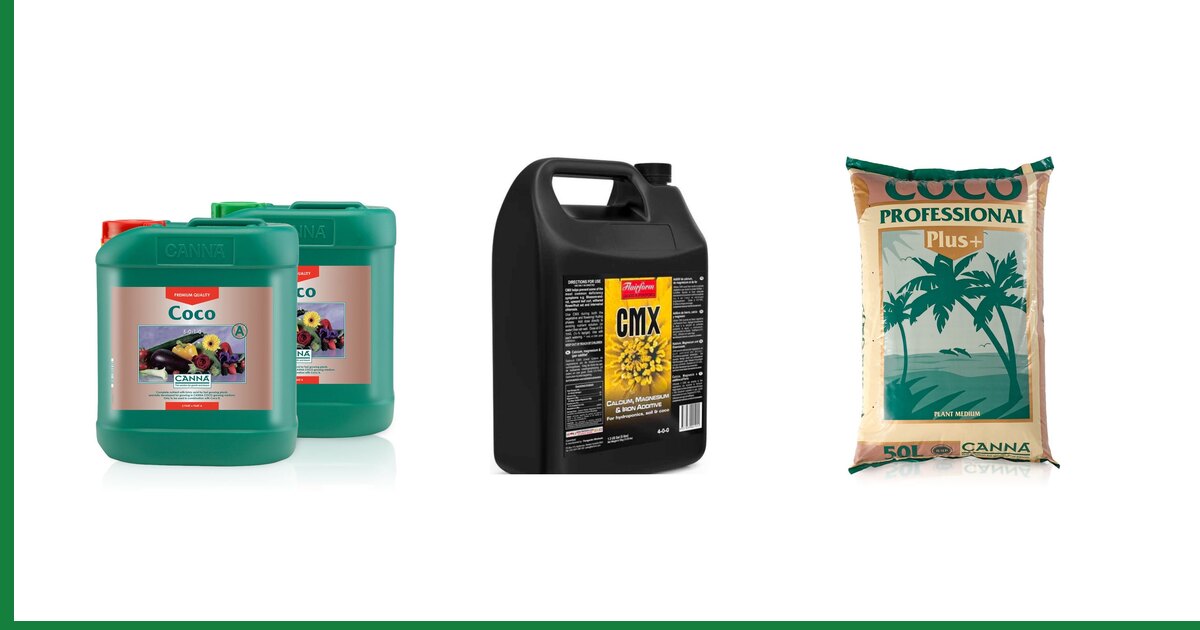
If you are running Dome coco or Canna coco, it is still worth checking run-off pH once a week rather than trusting the input figure alone. A calcium and magnesium supplement is the usual answer when run-off tells you the medium is pulling those elements out of your feed. There is more on this in our guide to growing in coco coir, and the full range sits under growing media.
Reading the run-off, not just the bucket
Input pH is what you made. Run-off pH is what the plant is actually living in. When the two disagree, believe the run-off.
- Run-off much lower than input: salts are building up. Flush with plain pH-adjusted water, then feed lighter.
- Run-off much higher than input: often an unbuffered or exhausted medium. Check your calcium and magnesium.
- Run-off steady and close to input: leave it alone - this is what you want.
Looking after the pen
A pH pen that has not been calibrated is a random number generator with a screen. Calibrate monthly with fresh buffer solution, rinse the probe in clean water rather than wiping it, and store it wet in storage solution - never dry, and never in plain water for long periods, which strips the bulb. A probe that drifts, responds slowly or will not hold a calibration has usually reached the end of its life.
Worth knowing. Cold water reads differently from warm. Take your reading at the temperature the plants will get it, not straight after topping up with cold tap water.
Frequently asked questions
What pH should I run in coco coir?
Between 5.5 and 6.3, allowed to drift across that range rather than held at one figure. Coco behaves much more like hydroponics than soil, so it needs a lower band than a peat or soil mix.
Do I adjust pH before or after adding nutrients?
After. Base nutrients and additives all move the reading, sometimes by a full point, so a pH set on plain water is meaningless by the time the mix is finished. Add everything, stir, then measure and adjust.
Why does my pH keep climbing in the reservoir?
A gentle rise is normal as plants take up nutrients. A fast climb usually means the solution is getting weak, the reservoir is warm, or there is not much solution left relative to the size of the plants. Top up, check the temperature, and reset the pH.
My plant looks deficient but I am already feeding heavily. What now?
Check pH before adding anything else. Outside the right band the element can be present in the water and still unavailable, and extra feed only adds to the salt load. Measure the run-off as well as the input.
How often should I calibrate a pH pen?
Monthly for a pen in regular use, and always after it has been dropped, run dry, or stored for a long period. Use fresh buffer each time - old buffer will calibrate the pen to the wrong value quite happily.
Does pH matter as much in soil?
It matters, but soil buffers changes so the reading moves more slowly and forgives the odd mistake. Aim for 6.0 to 6.8 and check every week or two rather than daily.