
5 min read
Growing in coco coir: watering, feeding and run-off
The short version. Treat coco as hydroponics with something to hold onto, not as soil. Feed every watering, run a small amount of run-off each time, keep the pH between 5.5 and 6.3, and add calcium and magnesium from the start. Coco that stays wet for days behaves nothing like coco watered little and often.
Coco coir is forgiving in the ways soil is not and unforgiving in ways soil never is. It holds a lot of water while still keeping air around the roots, it is consistent bag to bag, and it drains fast enough that overwatering is hard - provided you actually water it the way it wants.
The mental switch
In soil you water, then wait for the medium to dry back, and the soil itself supplies some nutrition. In coco you feed a complete nutrient solution every time, and you do it often. The coco is there to hold the solution and support the roots, not to feed the plant.
| Soil | Coco coir | |
|---|---|---|
| Watering | Wet, then a real dry-back | Little and often, never bone dry |
| Feeding | Some waterings | Every watering |
| pH band | 6.0 - 6.8 | 5.5 - 6.3 |
| Run-off | Occasional | A small amount every time |
| Cal-mag | Often unnecessary | Plan for it from the start |
Buffering, and the deficiency that arrives in week three
Raw coir carries potassium and sodium on its cation exchange sites. Put a normal feed through it and it will trade those away for the calcium and magnesium you just supplied. The plant looks fine for a fortnight, then shows what appears to be a classic calcium or magnesium deficiency - and feeding more of the base nutrient does not fix it.
Pre-buffered coco has had this dealt with before it reaches you. Either way, a dedicated calcium and magnesium supplement is not an optional extra in coco. Flairform CMX supplies calcium, magnesium and iron, and comes in 20 litre for larger rooms.
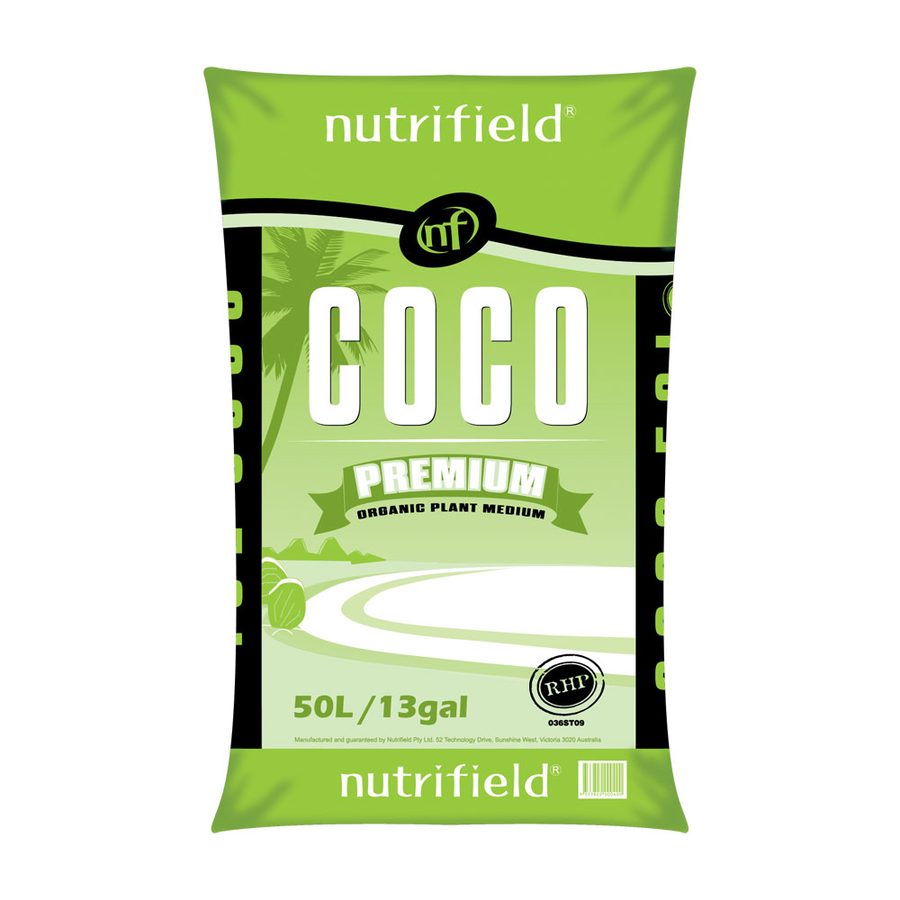
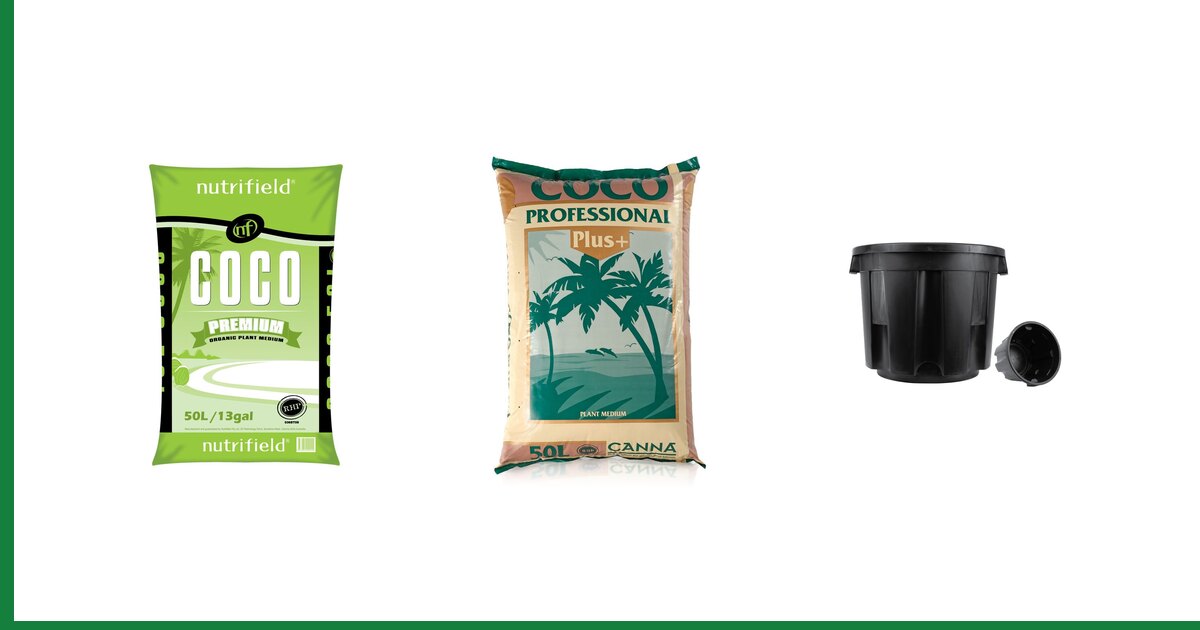
Coco by the bag - our 50 litre coco and Canna coco, both under growing media.
Watering: little and often
The single biggest change coming from soil is frequency. Coco holds air even when wet, so frequent watering does not suffocate roots the way it would in a dense mix. What does cause problems is the opposite - letting coco dry hard, which makes it hydrophobic and channel water straight down the sides of the pot.
- Seedlings and fresh transplants: small volumes, often enough that the surface never crusts.
- Established plants: typically once or more per day, depending on pot size and weather.
- Peak summer in a warm room: more than once a day is normal, not a sign something is wrong.
Aim for a modest amount of run-off - enough to carry away accumulating salts, not so much that you are pouring nutrient down the drain. If you never see run-off, salts build up; if half of it runs out, you are wasting feed.
Pot choice changes everything
Coco in a tall narrow pot drains differently from coco in a wide squat one. A 27L pot suits a plant you intend to finish in one container. The grated 27L pot drains and breathes faster, which suits a heavier watering routine or a warm room where you want more air at the roots. Both are in pots and trays.
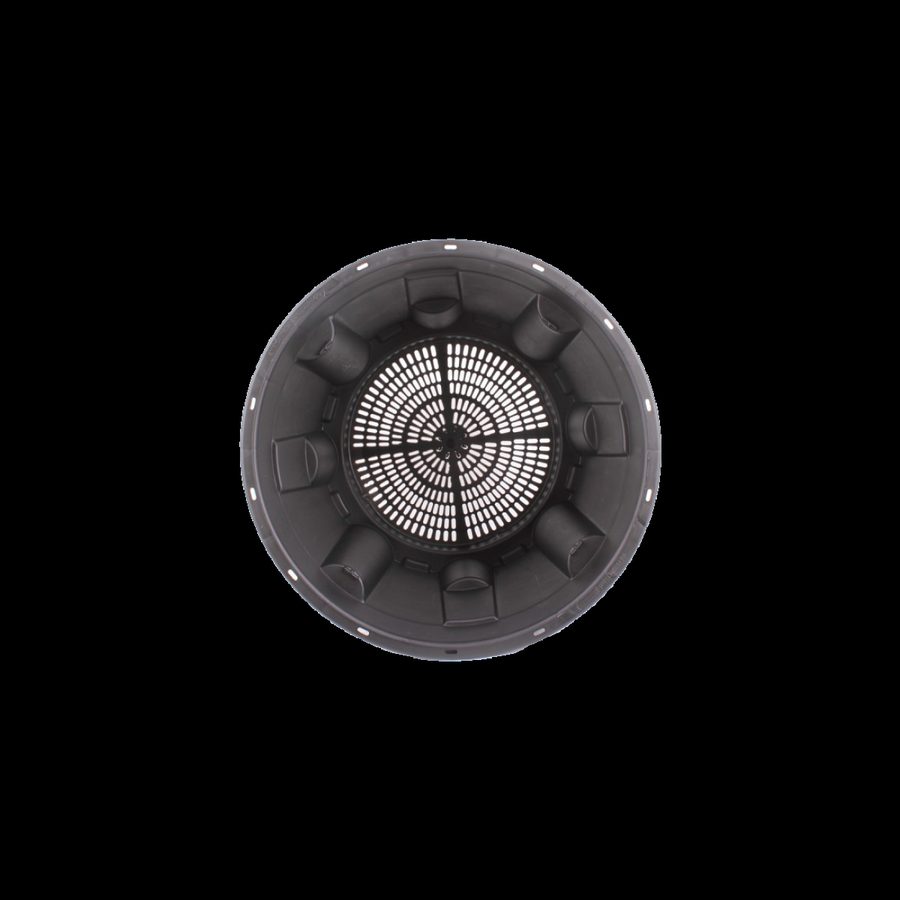
The grated 27L pot gives the root zone more air than a solid-walled pot.
Feeding in coco
Use a nutrient designed for coco or hydroponics rather than a soil feed. A two-part base such as Canna A + B is a straightforward starting point - add A, stir, then add B, never together undiluted. Rhizotonic earns its place in the first weeks and after transplanting.
Set pH after everything is in the tank, not before, and check the run-off as well as the input; there is a full explanation in pH and nutrient uptake. When you move into flowering, the additives change - see a feeding schedule by growth stage.
Preparing a new bag
- Hydrate it. Compressed blocks need soaking; loose coco from a 50 litre bag usually just needs wetting through.
- Run some pH-adjusted water with a cal-mag supplement through it before planting.
- Check the run-off pH. If it comes out far from where it went in, run more through before you plant.
- Fill pots to a consistent level so every pot behaves the same way - it makes judging by weight far easier.
Reusing coco
It can be reused, but it is not free. Old coco carries salt build-up, root debris and whatever pathogens the last crop had. If you do reuse it, break up the old root ball, flush thoroughly, re-buffer with a cal-mag solution and accept that a fresh bag is the lower-risk option for a crop that matters.
Frequently asked questions
How often should I water coco coir?
Little and often - usually at least daily for established plants, and more than once a day in hot weather. Coco holds air even when wet, so frequent watering is not the risk; letting it dry hard is, because dried coco repels water and channels it down the sides of the pot.
Do I need cal-mag in coco?
Plan for it. Coir exchanges calcium and magnesium for the potassium and sodium held on its own exchange sites, which commonly shows up as a deficiency a few weeks in. A supplement such as Flairform CMX covers calcium, magnesium and iron.
What pH should coco run at?
5.5 to 6.3, allowed to drift across that band rather than pinned to one figure. That is the hydroponic range, not the soil range - treating coco like soil at 6.5 is a common early mistake.
How much run-off should I aim for?
A small amount every watering - enough to stop salts accumulating, not so much that you are discarding a large share of your nutrient. No run-off at all lets the medium concentrate; heavy run-off is expensive.
Can I use soil nutrients in coco?
It is not ideal. Soil feeds assume the medium supplies part of the nutrition and are formulated for a higher pH band. A coco or hydroponic nutrient gives you a complete solution at the right pH for the medium.
Can coco be reused for a second crop?
Yes, with work - remove old roots, flush thoroughly and re-buffer with a cal-mag solution first. It carries over salt build-up and any disease from the previous crop, so for an important crop a fresh bag is the safer choice.