
5 min read
A feeding schedule by growth stage, from cutting to finish
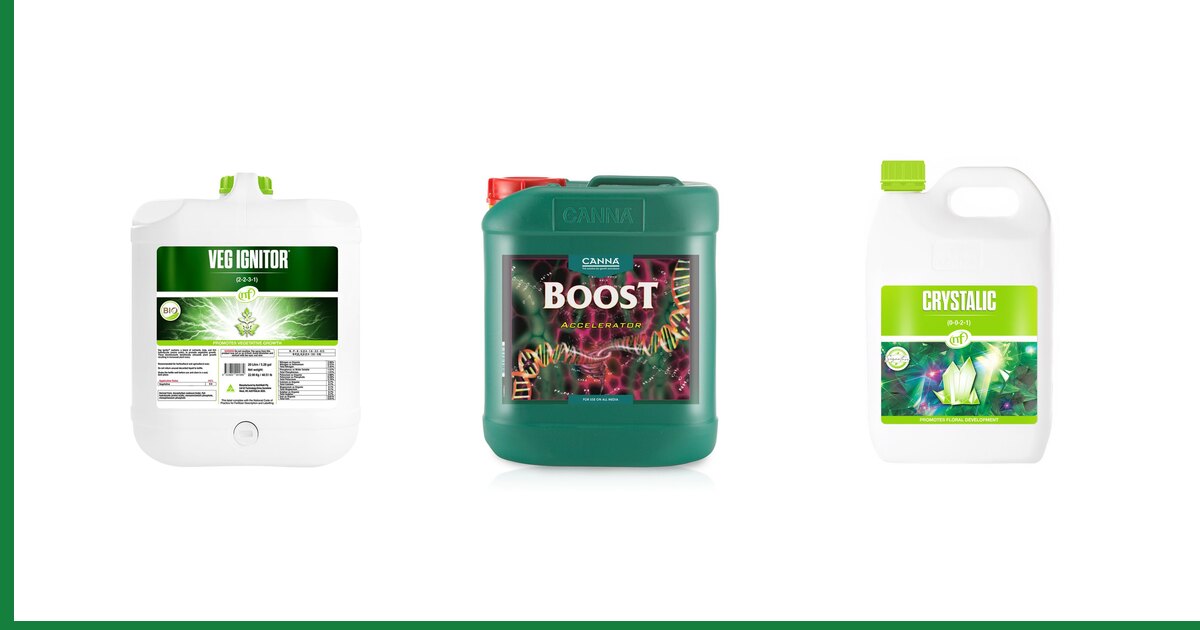
The short version. A plant wants different things at different times: nitrogen and root support while it is building structure, a hand-over period as it starts to flower, then phosphorus and potassium while it fills fruit or bloom. Get the base nutrient and the timing right first - additives are the last five per cent, not the first.
Most feeding problems are timing problems. A bloom booster run in week two does nothing useful. A veg feed still going in week eight holds a plant in leaf when you wanted it putting energy elsewhere. Here is how the stages break down and which of the products on our shelves belong in each.
Read the label, always. The rates below are a way of thinking about sequence, not dose figures. Every manufacturer writes a feed chart for their own range - follow theirs, and start at roughly half strength on anything young.
Stage 1: propagation and early root
A cutting or seedling has almost no root system, so the priority is encouraging roots rather than pushing growth. Feed very lightly - full-strength nutrient at this point concentrates in the medium faster than the plant can use it.
- Rhizotonic - a root stimulant for the first weeks and after transplanting. Also in 10 litre.
- Clonex at the point of cutting - see taking cuttings with Clonex and Jiffy.
- Base nutrient at roughly a quarter to a half of label strength once roots appear.
Stage 2: vegetative growth
Now the plant is building the frame that everything later depends on. Nitrogen leads, and the plant wants steady, unremarkable conditions rather than interventions.
Nutrifield Veg Ignitor is a vegetative stage feed with a label analysis of 2-2-3-1, available in 5 litre and 20 litre. A two-part base such as Canna A + B covers the same ground - the Canna range is built around running one base through the whole cycle and changing the additives.
Worth adding here rather than later:
- Flairform CMX for calcium, magnesium and iron - essentially standard in coco.
- Vitamax or Superthrive, vitamin and kelp style tonics used through the growing phase.
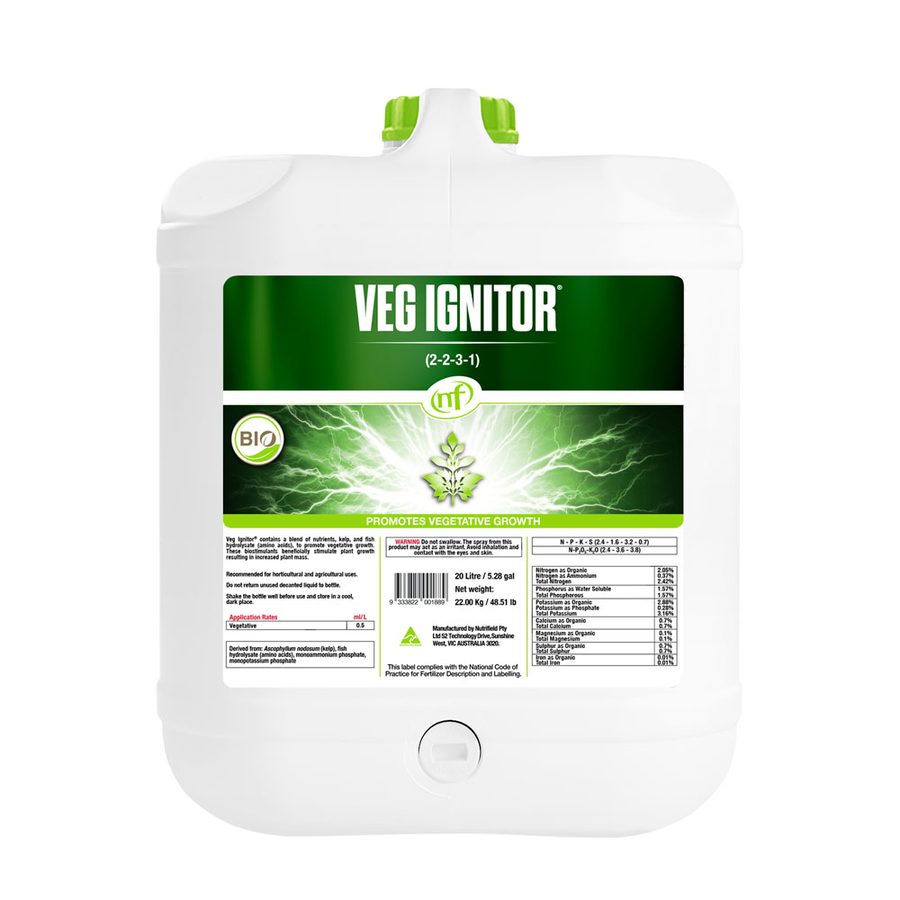
Veg Ignitor, label analysis 2-2-3-1, for the growing phase.
Stage 3: the transition
The fortnight either side of flowering starting is the stage most people skip, and it is the one that sets up everything after it. The plant is still stretching but beginning to switch its priorities, so you taper nitrogen rather than cutting it off, and introduce flowering support gradually.
- Reduce the veg feed over roughly a week rather than stopping it.
- Bring in a flowering additive at a low rate - Nutrifield Bud Burst is 0.15-0.1-0.9, deliberately gentle for this point.
- Keep calcium and magnesium going. Demand rises, it does not fall.
Stage 4: flowering and fill
Phosphorus and potassium lead now. This is where the bloom products belong, and where the analysis on the label starts to look dramatic.
| Product | Analysis / type | Where it fits |
|---|---|---|
| Canna PK 13/14 | Flowering booster | A short window mid-flower |
| Grotek Blossom Blaster | 0-48-31 | Pulse product, flowering stage |
| Grotek Monster Bloom | 0-50-30 | Bloom enhancer through fill |
| Nutrifield Crystalic | Flowering additive | Later flowering |
| House & Garden Bud XL | Enzyme based flower enhancer | Flowering stage |
| Canna Boost | Flowering accelerator | Alongside the base feed |
| Ozi Magic OMG Monsta Bud | Molasses based tonic | Through flowering |
The mistake here is stacking. Three bloom boosters at once is not three times the effect - it is an expensive way to lock out other elements. Pick one PK product, use it in its window, and keep the base feed doing the work. There is more detail in PK boosters and bloom additives.
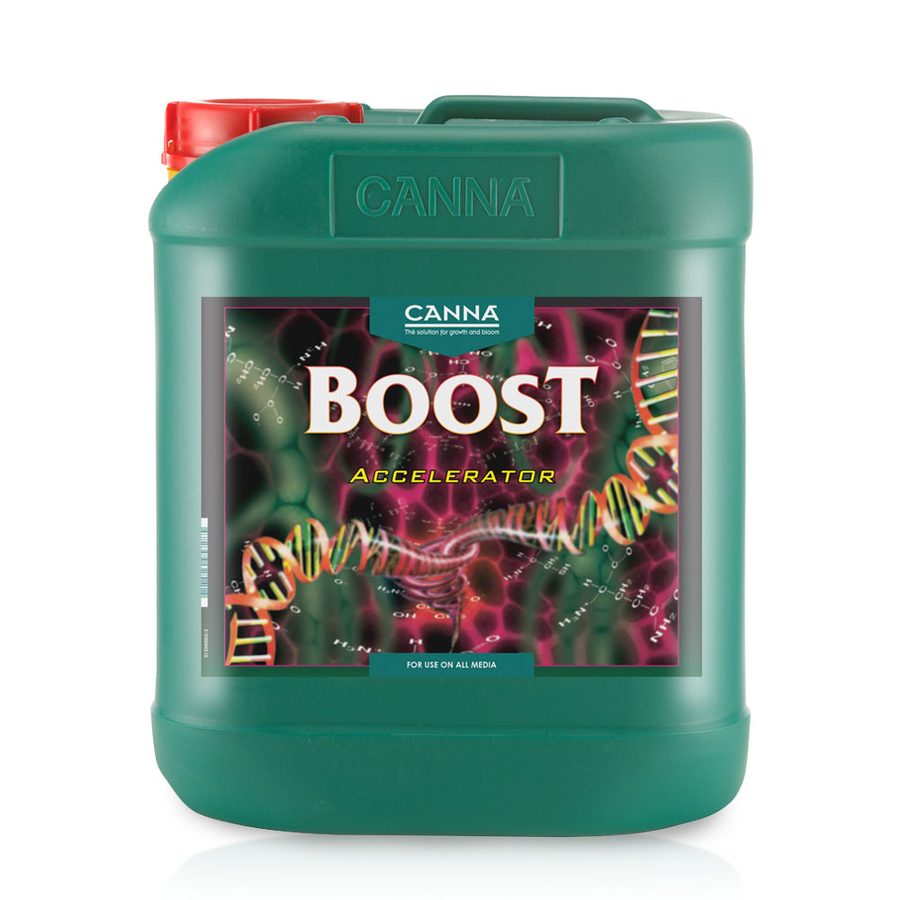
Canna Boost in 5 litre, and 10 litre for larger rooms.
Stage 5: finishing
Toward the end, feed strength comes down. Many growers run plain pH-adjusted water for the last stretch so the plant draws on what is stored in its own tissue. Watch the plant rather than the calendar - fading leaves late in the cycle are normal, and the same fade in week four is not.
Putting it on one page
| Stage | Leading need | Typical products |
|---|---|---|
| Propagation | Root development | Clonex, Rhizotonic |
| Vegetative | Nitrogen, cal-mag | Veg Ignitor or Canna A + B, CMX |
| Transition | Taper N, introduce P and K | Bud Burst, continued cal-mag |
| Flowering | Phosphorus, potassium | One PK product plus base feed |
| Finish | Reducing feed | Plain pH-adjusted water |
The full range is under nutrients and additives, split between the Dome and Canna lines. If you are unsure which combination suits what you are growing, bring your setup details in to the shop and we will put a schedule together with you.
Frequently asked questions
When should I switch from grow to bloom nutrients?
Taper rather than switch. Start reducing the vegetative feed as flowering begins and introduce a gentle flowering additive at a low rate over about a week, instead of stopping one product and starting another overnight.
Can I use several bloom boosters together?
It is rarely worth it. Stacking high-phosphorus products raises the salt load and can lock out other elements, so you spend more and often get less. Choose one PK product, use it in its window, and let the base nutrient do the work.
Do I still need cal-mag during flowering?
Yes. Demand for calcium and magnesium generally rises as fruit or flower fills, and it is a common late deficiency in coco. Keep it running rather than dropping it when the additives change.
What does 0-50-30 on a bloom product mean?
Those are the percentages of nitrogen, phosphorus (as P2O5) and potassium (as K2O). A 0-50-30 product supplies no nitrogen and a lot of phosphorus and potassium, which is why it belongs in flowering rather than in vegetative growth.
Should I flush before harvest?
Many growers reduce feed and run plain pH-adjusted water for the last stretch. Go by the plant rather than a fixed number of days, and treat late fading as expected rather than as a problem to correct.
Can I mix Dome and Canna products?
Usually yes, provided you keep one base nutrient and add supplements around it rather than running two complete programmes at once. Manufacturers write their charts assuming their own base, so if you mix, keep the total feed strength in check and watch the plant.